I Built a Language for Wireframing
Before AI builds anything for you, it needs clarity. TypMo is a language designed to give you that clarity first, a way to shape ideas at the speed of thought. This article is the story of how I ended up creating a Domain-Specific Language for wireframing.
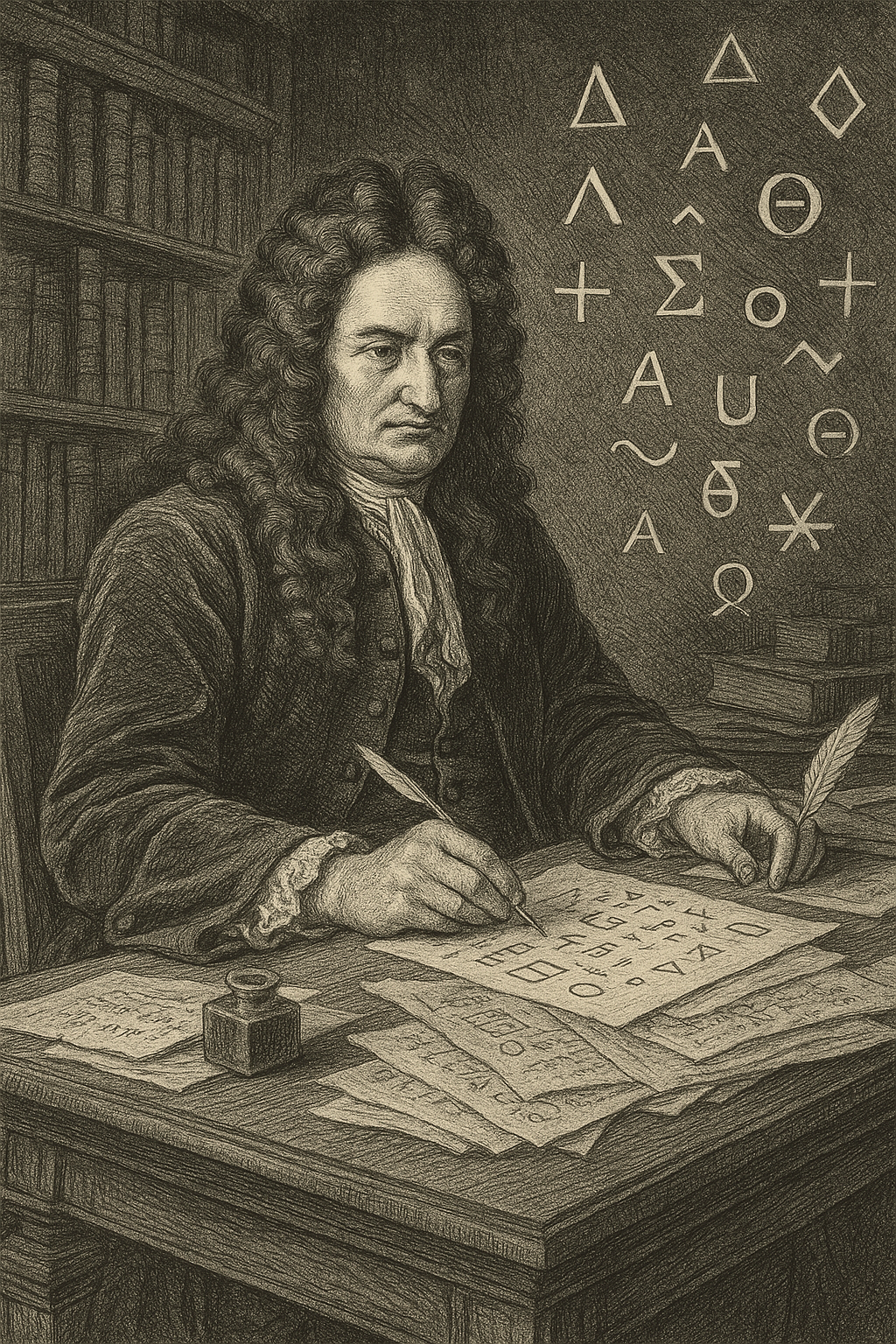
In 1676, Gottfried Wilhelm Leibniz tried something outrageous: invent a universal language of thought. Not Latin, not German, an entirely symbolic system where arguments could be calculated like equations. He called it characteristica universalis.
It didn’t work. Human thought is too unruly for a perfect logical machine. But the attempt revealed something deeper: the right language can make impossible work feel effortless. Mathematical notation helped us land on the moon. SQL lets us query billions of records in milliseconds. Musical notation allowed Beethoven to compose symphonies after going deaf because he could still hear everything in his mind through the score.
These aren’t “better” than English. They’re specialized—created to express one kind of thinking with uncanny precision.
That’s exactly where my journey with TypMo began, though in a much smaller and practical way. While building BookStates, I found myself avoiding Figma during the early stages. Instead, I worked with quick, semantic wireframes: just enough structure to think, explore, and iterate without the weight of pixels. It was fast, clear, and surprisingly effective. A month ago, I realised I could productise that workflow instead of keeping it as a personal hack.
At the same time, the gap in today’s AI-heavy world became obvious. AI can produce remarkable outputs, but the quality depends entirely on how clearly we express the idea. When thinking is fuzzy, prompts are fuzzy. And fuzzy prompts lead to expensive, time-consuming iterations.
Information Architecture is the stage where ideas actually form. It’s the draft before the draft: the structural phase where you decide what goes where and why. But most tools push you straight into visual design or straight into AI generation, skipping the thinking step entirely.
TypMo does the opposite. It gives IA wireframing its own instrument.
You type structure at the speed of thought. Fluent, natural, design vocabulary. Like a UX stenographer capturing the shape of an idea before it evaporates, and a cartographer mapping the terrain of a product before anyone else can even see it.
TypMo exists because IA wireframes are the right tool for the right job: quick experimentation, fast iteration, and structural clarity, before you commit to the expense of prompting AI for polished designs or code. It’s where you finish thinking before you start prompting.
Write structure like this:
Header:
* Logo
* Search bar for customers
* Avatar

Main Canvas:
* Heading: Sales Dashboard
Grid 3:
Metric: Revenue | $245K | ↑15%
Metric: Orders | 1,234 | ↑8%
Metric: Conversion | 24% | ↑3%
End Grid

* Table: Customer | Order ID | Status | AmountThe Typmographer
You crystallize the idea in seconds. No drag-and-drop. No pixel tweaking. Just structure: clean, visible, and unambiguous. And there’s more flexibility: you can create wireframes through prompts, or simply upload a sketch and let TypMo turn it into a discussion-ready structure.
Generate wireframes from prompts
Convert sketch to wireframes
Creating a language
Over time, something clearer took shape: TypMo wasn’t just a workflow shortcut. It had all the ingredients of an actual language. The inline parser I had built already behaved like the foundation of a Domain-Specific Language (DSL), so I developed it into one. A real DSL with its own grammar, compiler, semantic rules, and Abstract Syntax Tree. A language designed specifically for capturing structure before AI takes over execution. You can read more about the technical details here.
Why a DSL?
Because the IA stage is fundamentally structural. It’s where you organise ideas, test shapes, and define relationships, long before committing to visuals or code. The IA wireframe isn’t about polish; it’s about clarity of form. And structure is easiest to manipulate when it’s represented cleanly, consistently, and unambiguously. That’s what a formal language gives you.
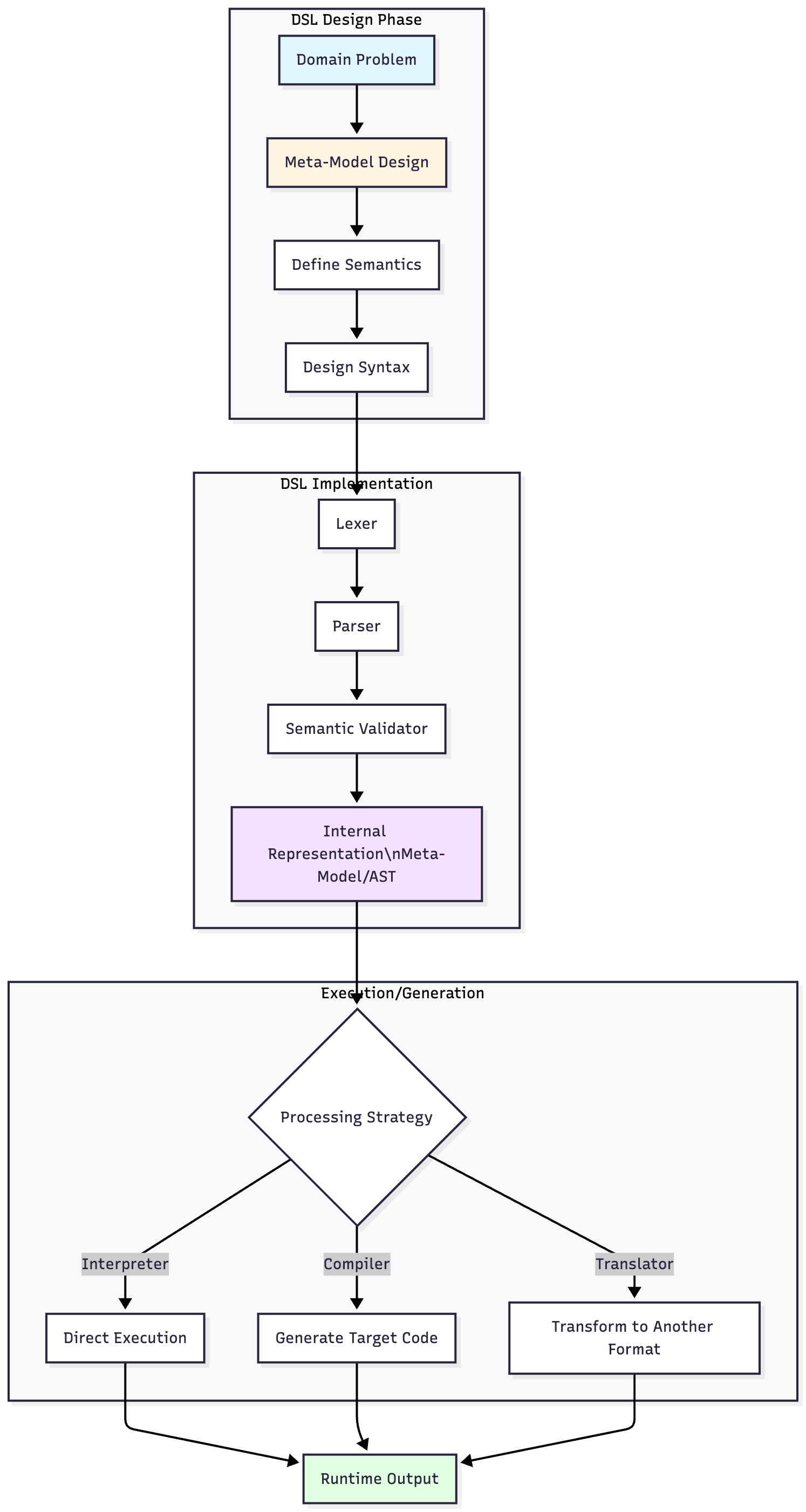
Once you have a proper DSL, everything opens up. You can express structure quickly, validate it instantly, and hand it off to AI without ambiguity. You move from rough idea to precise intent in minutes. From early exploration to AI-ready prompts with confidence. The language becomes the lens that sharpens the thinking before anything gets generated.
TypMo is the missing layer: the clarity layer.
It’s not here to replace design tools or code generators. It exists to make sure you don’t pour time, tokens, or effort into the wrong thing. It forces structure to settle before aesthetics take over. It turns half-formed ideas into something solid—so that when you do move to AI or high-fidelity design, you’re building on firm ground instead of guesswork.
Musical notation didn’t replace musicians. It amplified them.
SQL didn’t replace analysts. It empowered them.
TypMo works the same way. It doesn’t replace designers. It strengthens the part of the process most tools forget, the moment where thought becomes shape. It turns thinking into structure with almost no friction, and structure into AI-ready outputs without waste.
If you want to talk DSLs, clarity, or AI-era workflows, reach out. And if you try TypMo, I’d love to see what you build.

Adit Gupta Newsletter
Join the newsletter to receive the latest updates in your inbox.